Command center for live work.
Daily work, task states, team visibility, exceptions, and executive dashboards.
- Operating tasks and states
- Exception visibility
- Executive operating views
OPS designs and builds flexible ERP systems for operations, assets, fleet, field teams, procurement, finance, approvals, and executive visibility.
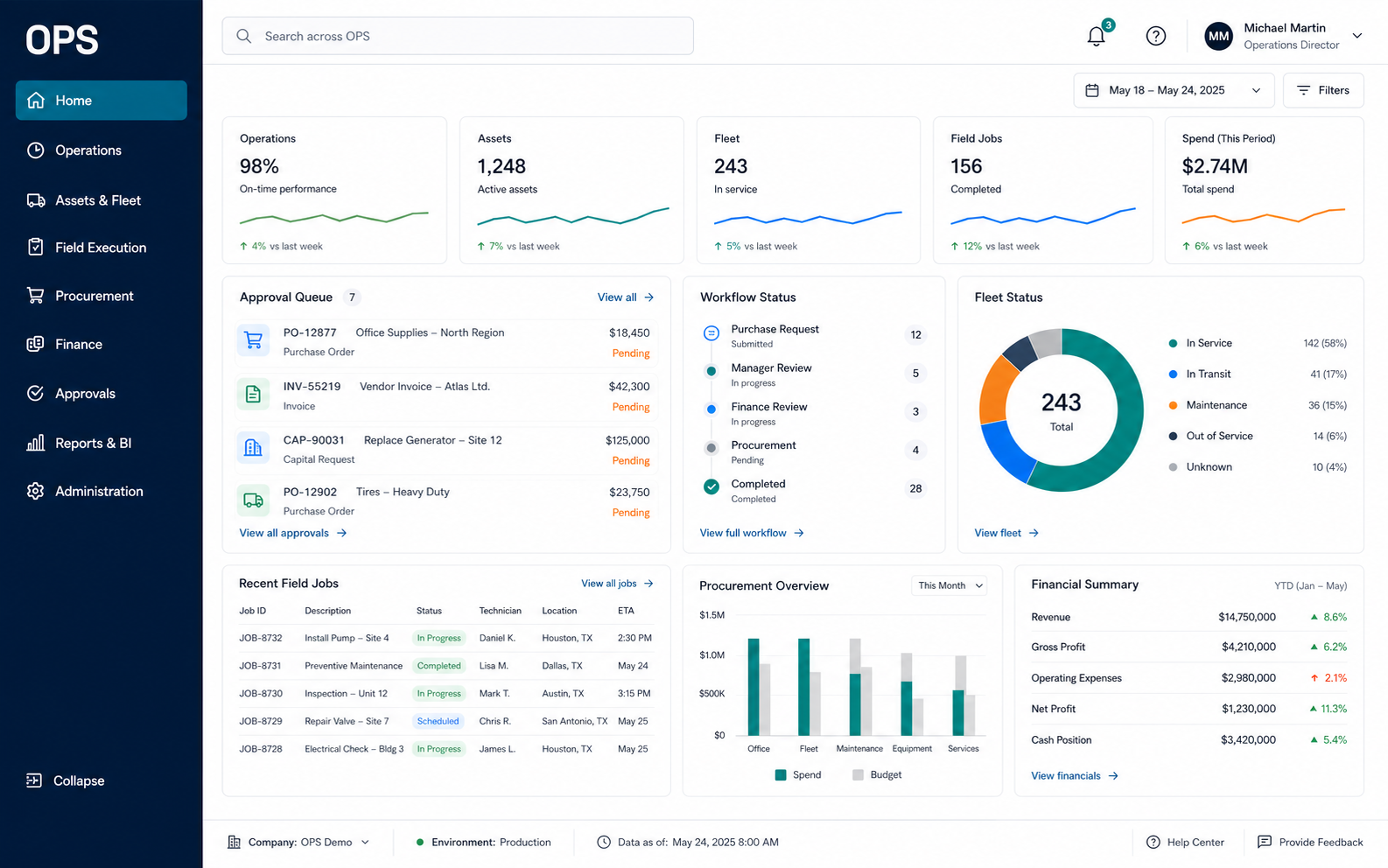
Start with the domains that matter first, then connect the rest as the business matures. Each department gets a clean home while the handoff stays connected.
Daily work, task states, team visibility, exceptions, and executive dashboards.
Asset registry, fleet status, utilization, assignment, documents, service, and readiness.
Field jobs, inspections, checklists, evidence, work orders, and response flow.
Supplier records, purchase requests, sourcing, rented assets, approvals, and documents.
Invoices, PRF, payment requests, back charges, cost tracking, and financial summaries.
Approval rules, exception routing, manager review, finance review, and controlled handoff.
Dashboards, summaries, operating views, exports, and reports shaped around real management questions.
Roles, permissions, templates, settings, audit trails, workflow rules, and governance.
OPS is strongest where work crosses departments, assets, people, approvals, documents, money, and site execution.
Projects, resources, subcontractors, sites, equipment, work progress, claims, and cost control.
Fleet availability, rental movement, maintenance, transport, customer billing, and utilization.
Dispatch, trips, vehicle status, documents, approvals, customer delivery, and operational visibility.
Work orders, inspections, suppliers, maintenance schedules, assets, compliance, and reporting.
Teams, jobs, checklists, photos, issue capture, approvals, route visibility, and customer updates.
Purchasing, inventory, pricing, sales handoff, supplier flow, invoicing, and management dashboards.
The first release solves a real pressure point, then the ERP expands with proof and adoption.
We learn your business rules, teams, data, documents, and decision paths.
We turn the first release into screens, states, and user journeys your team can validate.
We configure and build the modules that match your business, not the other way around.
We connect existing systems and migrate data so your ERP can start with confidence.
We prepare your users and admins for the operating rhythm of the new ERP.
We keep improving the ERP as your business changes, expands, and learns.
The best ERP conversation starts with real context: your industry, your current tools, what breaks most often, and which domain should become the first release.